Mechanism eligibility assessments and pre-certification checks
Independent eligibility and value assessments across CBAM, EACs, EU ETS and more for commodity producers navigating compliance and voluntary scheme complexity.
Three answers every producer needs
Whether you are wanting to maximise value from a lower-carbon product, build a business case for investment in decarbonisation, or preparing a regulatory submission - Sylvera delivers the eligibility, gap analysis with recommendations and value picture in one defensible report.
Confirm Eligibility
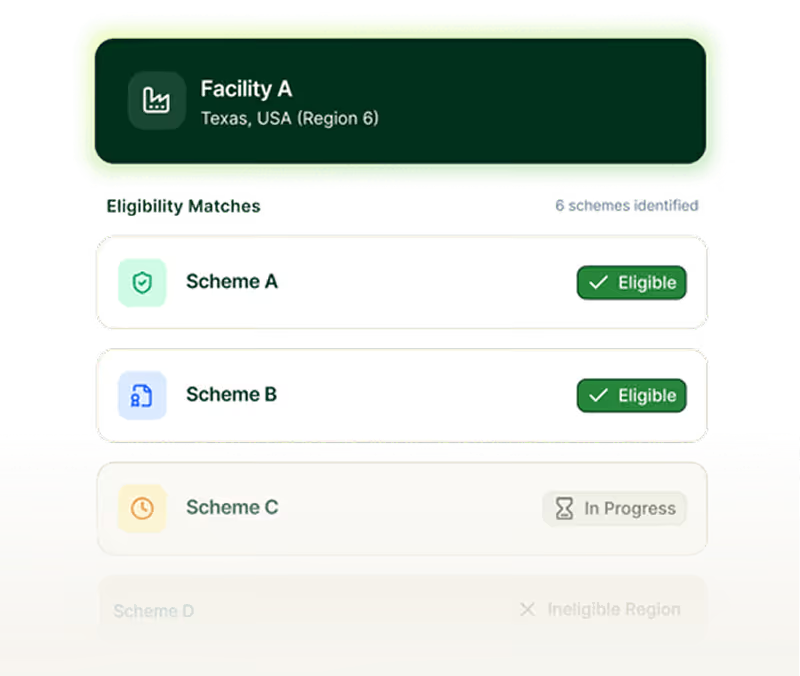
Pre-certification check across multiple mechanisms. A binary, rule-traceable determination for every mechanism in scope - grounded in the rule text, the quantification method, and the data you can actually produce.
Close the Gaps
A structured gap analysis mapping each failed criterion to the data, documentation or operational change that would unlock eligibility - so your team knows exactly what work needs to be done.

Unlock Value
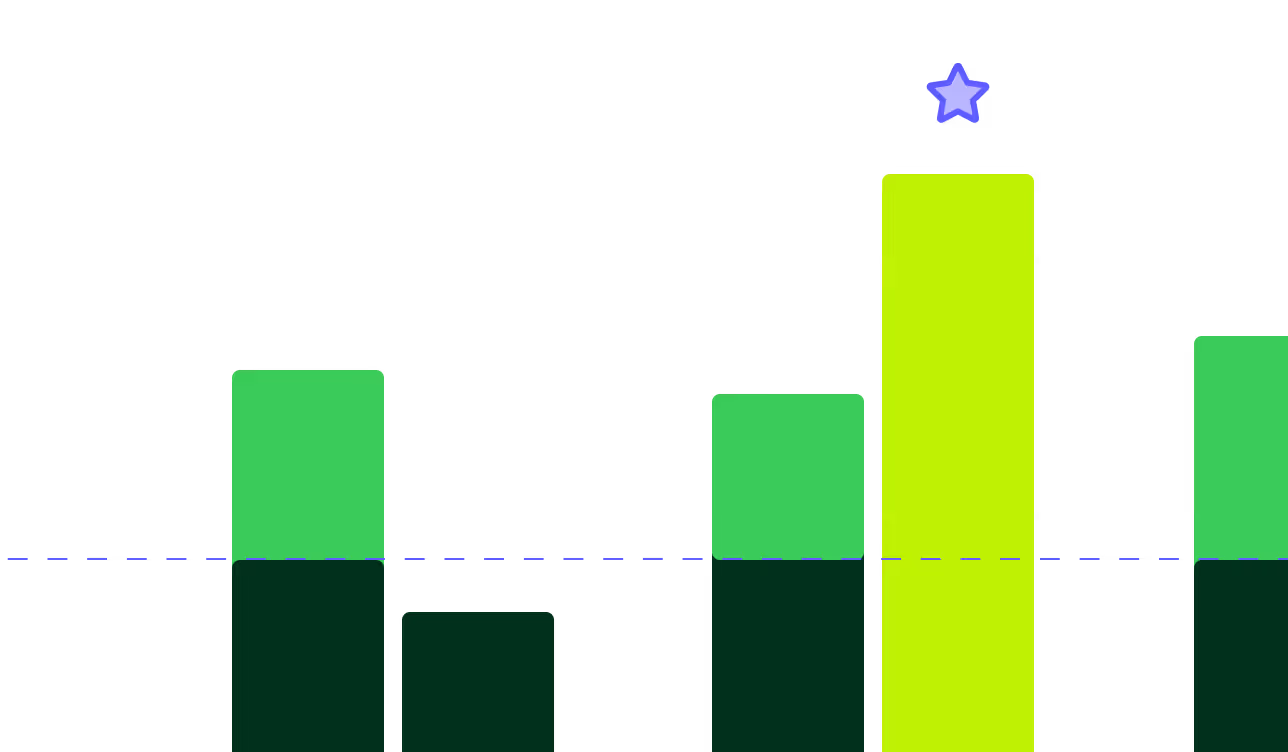
A lifecycle value estimate in dollars, credits and compliance deficit offset - using live Sylvera price indices and the regulator's own baselines - so the commercial case is ready for the boardroom.
.avif)
What sets our Mechanism Eligibility Assessment apart
Typical mechanism assessments

Comprehensive Analysis
Regulator-aligned carbon intensity
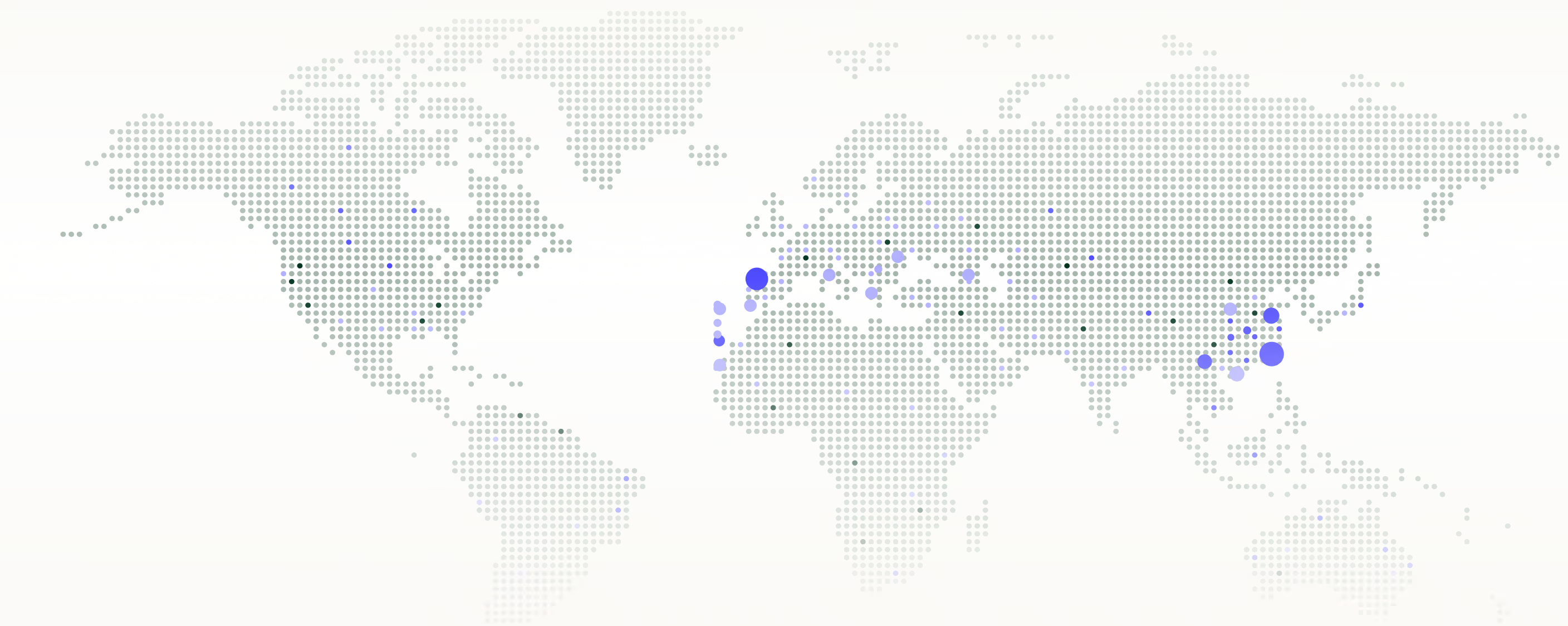
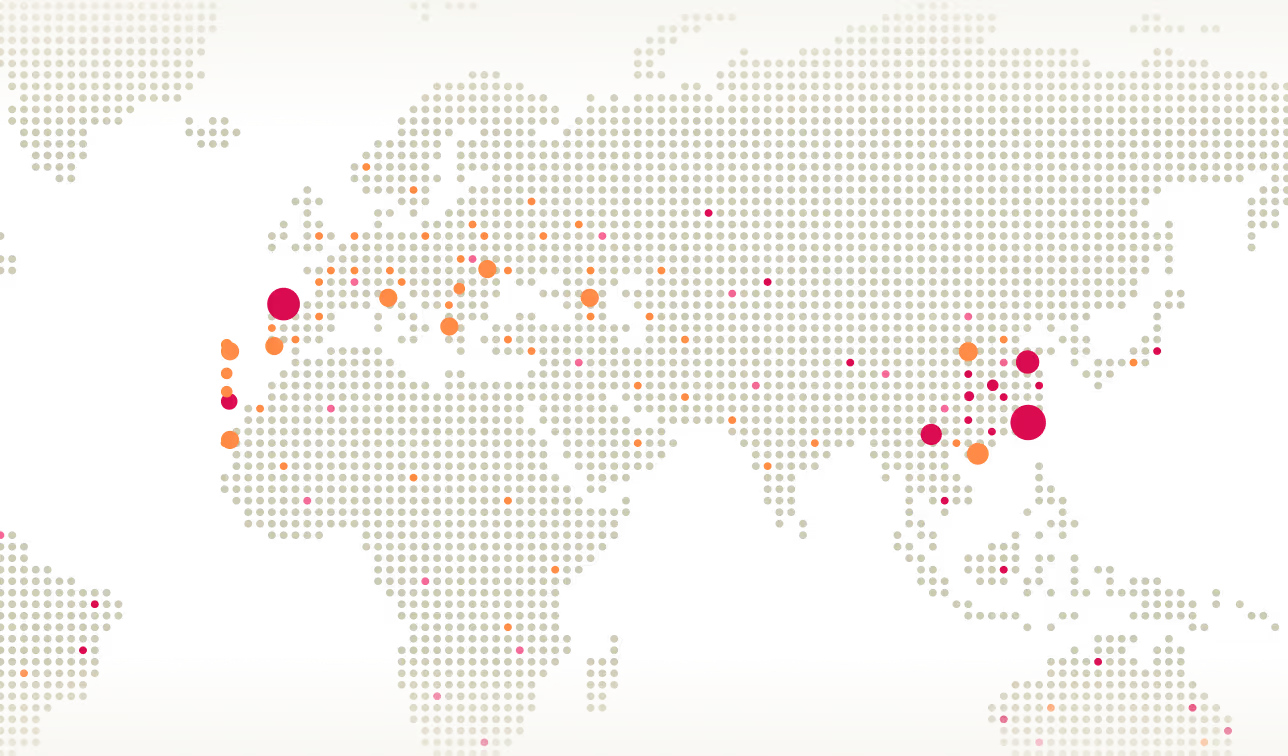
Sylvera translates your facility and cargo-level data into each mechanism's own methodology — boundaries, allocation rules, emission factors, and more — so you can see your Carbon Intensity score across every relevant market and methodology at once.
Transparent decision logic
Our platform maps your facility data against the eligibility requirements of multiple mechanisms simultaneously - so when rules change or new pathways open, you see the impact immediately without starting from scratch.
Broad mechanism coverage
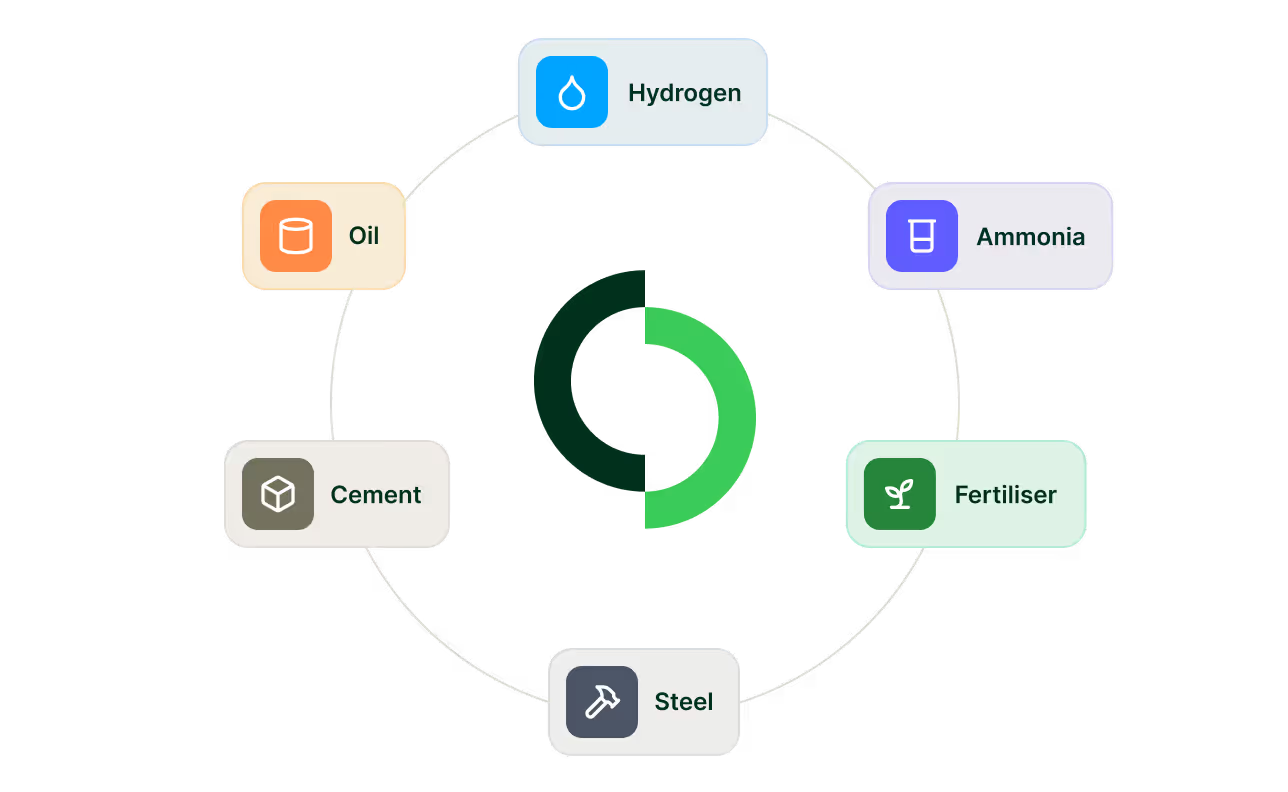
Live library spans Cement, Ammonia, Oil and Steel mechanisms, including California LCFS, FuelEU Maritime, EU ETS, CBAM, tax credits and EACs.
Commercial value, priced to market
Potential value for your facility is provided per mechanism in a way that you can edit yourself to compare scenarios and changes over time, e.g. for the phase-in of compliance schemes.

CURA case study
See how low carbon cement producer CURA use Sylvera to prove integrity & unlock value in low-carbon cement with LCA review and mechanism mapping
Independent Ratings, independent transactions
Our mechanism models are built by the same team that rates the market's credits - with the same governance separation, peer review and methodological transparency. Eligibility determinations are never influenced by commercial outcomes.
Sylvera engages directly with regulators, standard setters and academic partners, and contributes to the scientific literature on carbon measurement - so our mechanism logic tracks the rule text, not market narrative.
FAQs
Everything you need to know about Mechanism Eligibility Assessments and pre-certification checks.
A memo answers one question, once. Sylvera's eligibility engine is a structured, re-runnable decision model.
Every determination is linked to the rule section and the CI input that drove it, so the output is auditable, defensible and updateable when your data, the rule, or the quantification method changes so you can understand the impact on your facility.
Global mechanisms for cement, ammonia, oil and steel. We are an independent assessment provider and are mechanism agnositc, providing you with a rosetta stone to maximise the value of your product.
Both - with field-level data always taking precedence over defaults.
The framework is explicitly built around the regulator's data hierarchy. Specific facility and cargo data feeds the model where available, and Sylvera can use temporally or geographically specific proxies where necessary.
Value is modelled per mechanism for your facility.
For each eligible mechanism, outputs are provided per tonne, barrel and/or per facility-year. Sensitivity is shown on the commercial levers that matter most.
Oil, cement, steel and ammonia producers, and the investors, offtakers and advisors who diligence their claims.
Producers use it to underwrite decarbonisation capex,maximise the value of their product and get certified; investors and offtakers use it to stress-test low-carbon claims and price premium and compliance risk into contracts.
As a client-ready report, a linked value calculator, and - for Sylvera platform customers - structured outputs via API and UI.
Every deliverable is built to be shared with an internal investment committee or external regulator, with a full audit trail of inputs, rule citations and confidence levels.
Check your mechanism eligibility
Explore the carbon data powering real-world investment and procurement decisions.